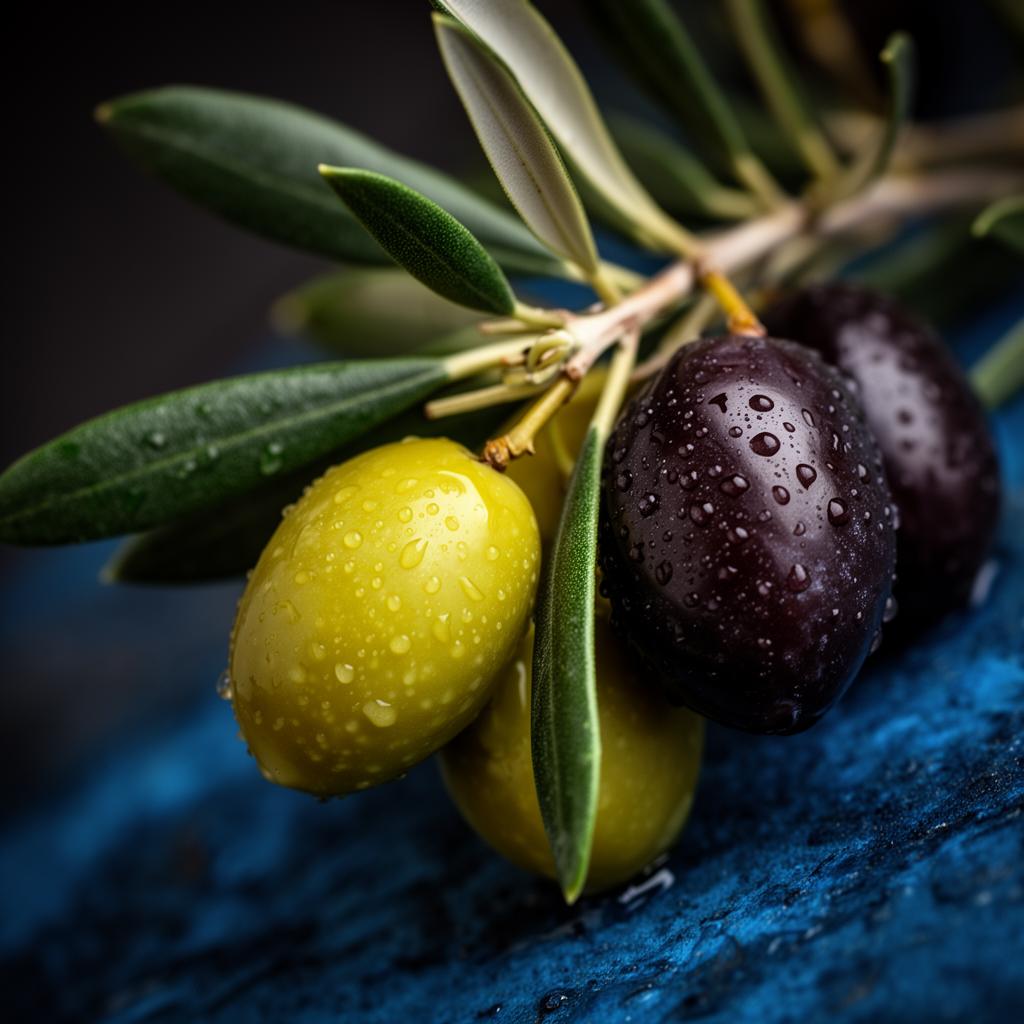
The scoreboard
Five comparisons that show up consistently in industry data:
- % extra virgin grade. Greece ~80%, Italy ~40%. Greece converts a much larger share of its harvest into the highest grade.
- Average polyphenol count. Greek Koroneiki EVOOs routinely test at 500+ mg/kg. Italian Frantoio and Leccino oils typically test lower, with a balanced sensory profile.
- Single-estate culture. Both countries have it; Italy has more visible export brands, Greece more family-owned export-direct estates.
- Production scale. Italy produces more total oil; Greece produces a higher proportion of premium oil per litre.
- Geographic indications. Italy has the most PDOs / PGIs; Greece has the largest single PDO region (Kalamata).
Varietals — the real reason for the gap
The polyphenol gap is mostly a varietal story. Greece's dominant varietal, Koroneiki, is small, late-ripening, and naturally polyphenol-dense. Italy's dominant varietals — Frantoio, Leccino, Moraiolo, Coratina — produce excellent oil, but only Coratina rivals Koroneiki on pungency and polyphenols.
When an Italian estate wants competition-grade phenolics, it often turns to Coratina-led blends from Puglia. When a Greek estate wants the same, the dominant Greek varietal already delivers it.
Harvest practice
Greek estates lean toward early harvest — picking green, often in October — when polyphenols peak and yields are lower. Italian production is more varied: top estates harvest equally early, but Italian volume production tends to harvest later for higher yield, which trades phenolics for output.
The other half of the story is processing speed. The best Greek estates mill within hours of picking, at controlled temperatures (cold extraction below 27°C), with no chemicals. That is now industry best practice in both countries — but it is the practice that defines premium EVOO regardless of where it is grown.
What ends up in the glass
The flavour profiles are genuinely different, and you can taste them blind:
- Greek Koroneiki: peppery, grassy, artichoke, throat-catching pungency, long bitter finish.
- Greek Athinolia / Manaki: rounder, tomato-leaf, almond, softer pungency.
- Tuscan Frantoio / Leccino: herbaceous, floral, balanced bitter-pungent, classic table oil.
- Pugliese Coratina: intensely peppery, almond, long bitter finish — the closest Italian match to Koroneiki.
For finishing pasta or grilled vegetables, the choice is a matter of taste. For a daily wellness EVOO chasing the EU health claim, the math favours Greek Koroneiki.
The verdict
If you are drinking olive oil for the polyphenols, buy high-phenolic Greek EVOO with a printed mg/kg count. If you are dressing a Tuscan ribollita, an Italian Tuscan EVOO is the right cultural and flavour fit. Most kitchens benefit from keeping both: a peppery Greek finishing oil and a balanced Italian table oil.
What matters more than the country is the producer. Buy from someone who prints the harvest date, the acidity, and the polyphenol count — Greek or Italian.
Questions, answered.
- Is Greek olive oil better than Italian olive oil?
- On the most measurable axes — phenolic content, percentage of output that qualifies as extra virgin, single-estate traceability — Greek extra virgin olive oil consistently outperforms Italian. Greece runs roughly 80% extra virgin vs around 40% in Italy, and Koroneiki-based Greek EVOOs frequently exceed 500 mg/kg of polyphenols. That said, both countries produce excellent oil; the producer matters more than the country.
- Which is better, Greek or Italian olive oil?
- It depends what you want. For peppery, high-polyphenol finishing oil, Greek Koroneiki is hard to beat. For balanced, herbaceous everyday cooking oil, Italian estates from Tuscany and Umbria are excellent. For Mediterranean diet evidence, both qualify — the EU health claim is about polyphenol content, not origin.
- Why is so much Italian olive oil actually Greek?
- Italy imports a large volume of Greek olive oil to meet domestic demand and to blend into bottles labelled with Italian branding. Estimates vary, but a meaningful share of mass-market 'Italian' EVOO contains Greek oil — in many cases the higher-polyphenol Greek oil that lifts the blend's profile. This is legal under EU labelling rules but tells you why country of origin alone is a weak signal.
- Is Greek olive oil good for you?
- Yes — and disproportionately so when it is high-polyphenol Greek EVOO. The EU's only authorised olive-oil health claim is tied to polyphenols, and Greek Koroneiki-based oils routinely deliver multiples of the EU threshold. Combined with the broader evidence behind the Mediterranean diet, daily use of a fresh, high-polyphenol Greek EVOO is one of the most evidence-supported food choices available.
- What is the best Greek olive oil compared to top Italian brands?
- On a like-for-like comparison — single estate, current harvest, organic, high polyphenol — top Greek estates like the producers in our collective stand alongside the most respected Italian houses (Frantoio Franci, Marchesi Frescobaldi, Capezzana). The flavour profile is different — Greek tends peppery and grassy; Italian leans floral and almond — but the quality ceiling is the same.